BenettiOperating brand — ready-to-wear and made-to-measure

I built a menswear brand, and a supply chain, from nothing.

I started Benetti in high school with no industry contacts, no family in fashion, and no connections overseas. I built the supplier network from cold outreach, learned to write a garment spec a factory could actually work from, designed the brand, shot the campaigns, and built the store. The first run sold most of itself through word of mouth. Everything I am doing now is about reaching the people who have never met me.

Role
Founder
Focus
Brand, sourcing, product development, go-to-market
Period
2023 to present

What I walked into

Nobody was going to hand a teenager a supply chain.

The idea was simple enough: well-made, ethically produced clothes that feel personal, without paying luxury prices for a logo. I tested it before spending anything, interviewing 24 men working in tech and business about what menswear was not giving them. Personalisation, quality over volume, and responsible production came back loudest, and those three became the brand.

The hard part was never the idea. I was seventeen, in Washington State, with no contacts in the industry and none abroad. Manufacturers do not take meetings with teenagers, and the ones who reply want order quantities in the thousands. I had to build the entire production side myself, from strangers, starting from nothing.

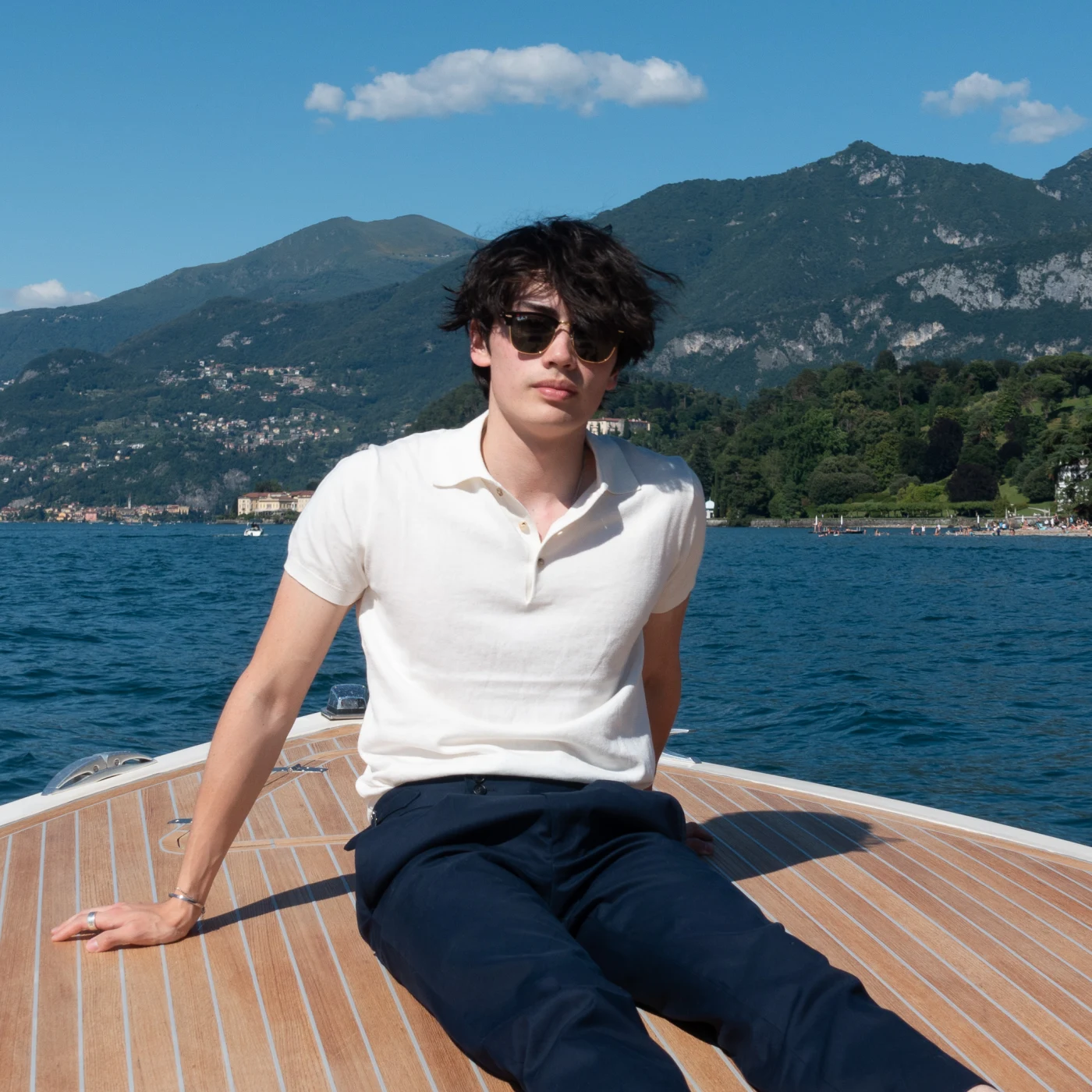
Benetti white polo photographed on Lake Como
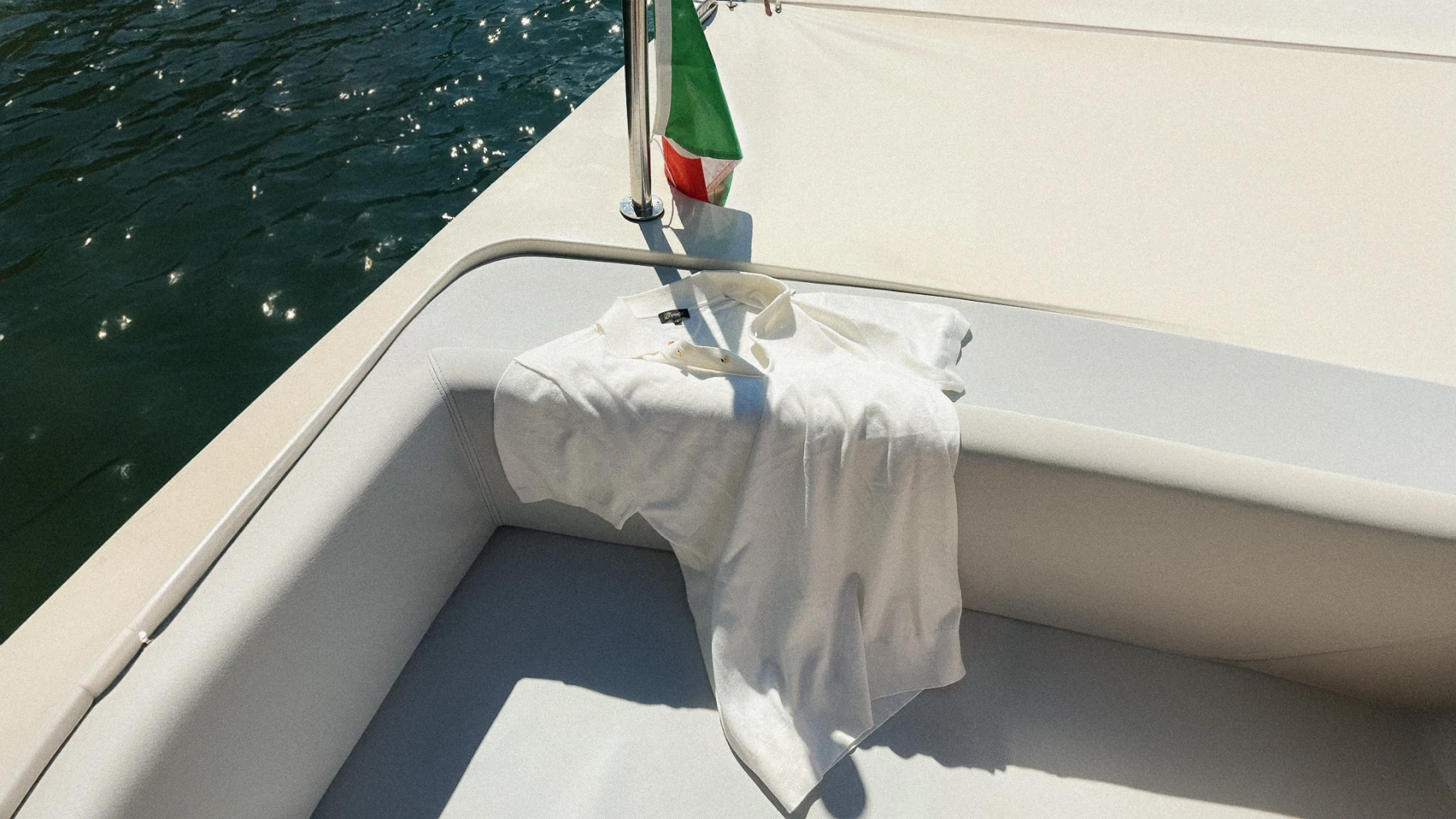
Benetti white polo photographed on a boat
Benetti

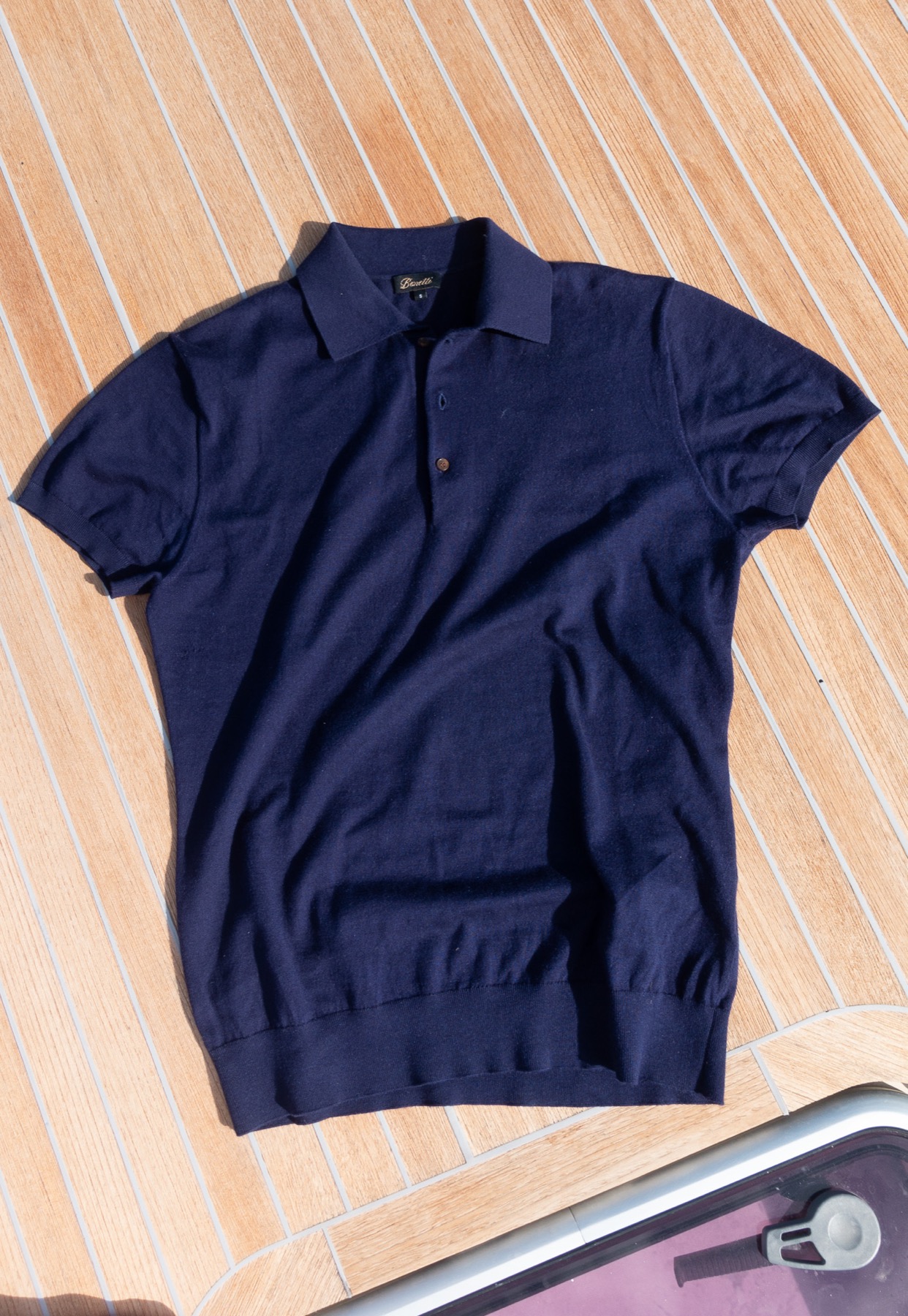
Original product and campaign photography from the first collection. The visual direction had to communicate the same understated quality promised by the product.

How the work changed

Cold outreach, then learn the trade well enough to be taken seriously.

I found yarn producers and knitwear factories and emailed them one at a time. Most never replied. The ones who did wanted to know things I did not yet know how to answer, so I learned: how a spec is written, what a size grade is, what changes when you move a rib gauge or a button, what a realistic minimum order looks like for someone starting out. I kept going until I found partners who would work at my scale and who I could stand behind on labour and environmental standards, then did the same again for tailoring.

Then I built everything around the garment. The name, the marks, the palette, the tags and care labels, the packaging. I built the store myself and shot all four campaigns myself — New York, a Friday night, Lake Como, Florence. Every part of this brand exists because I made it, which is the part I am proudest of and also the part that became the constraint.

The turning point

The first run sold 72 of 150 polos in sixty days, almost entirely by word of mouth. That answered the question I was actually asking — the product and the price are right, and people who see it buy it. It also exposed the real problem. Every one of those sales traced back to someone who already knew me. I had built a brand and a supply chain, and no way at all to reach a stranger.

Decisions that mattered

The work got better when the tradeoffs became explicit.

One product, not a collection

Starting with a single polo meant one fit, one material story, one thing to get right. A second product would have doubled everything I did not yet understand, and I would have learned the production and logistics side twice as slowly.

Partners I could stand behind, at a size that would have me

I chose on quality, on whether they would take small runs, and on their labour and environmental standards. Small order quantities are what let a brand exist before it has money, and most of the industry is not built for that.

Made-to-measure, where the fitting is the relationship

Each garment is specified against what that person chose: lapel width, lining, sleeve buttons, where the monogram sits, the cloth itself. It is where the brand is strongest, because the thing that makes it worth buying is the thing that also sells it.

What exists now

The brand is real. The next build is distribution.

What exists today: a manufacturing relationship I built from cold emails, a spec a factory can work from, a full brand identity, four campaigns I shot myself, a working store, and a made-to-measure line with real clients who come back. For someone who started with no way into this industry, that is the part I would defend.

Word of mouth proved people want the product. What it could not prove is that I can reach someone outside my own network, and that is the problem I am pointed at now. It is also the harder one — designing another product is always available and always feels like momentum, which is exactly why it is worth being suspicious of.

So the next move is a channel where my customer is already in one room. I am building a campus programme for top MBA and law schools: a workshop on dressing for interviews, then a fitting, then a first suit at close to cost, with career services and financial aid involved so it reaches students regardless of budget. Students heading into interviews are the most motivated version of my customer, and it puts the fitting in front of a room instead of one person at a time. Alongside it I am building an iPhone app that measures someone from a phone scan, so a fitting no longer has to be me in the room.

72 / 150

first run sold in 60 days

Almost entirely word of mouth, direct through a store I built myself.

24

customer interviews before launch

Men in tech and business, on what the menswear market was not giving them. Personalisation, quality and responsible production came back loudest.

0

industry contacts at the start

The supplier network was built from cold outreach, one email at a time, at seventeen.

What I carry forward

The parts I would take into the next problem.

You can build a supply chain from cold emails, it just takes being worth replying to

Nobody was going to help me because I asked nicely. What changed the replies was learning the language — specs, grades, order quantities, lead times — well enough that a factory could see I would not waste their time. Credibility was something I had to construct, the same as everything else.

Making it was never going to be the hard part

I can get a garment made to a standard I am happy with. What I could not do was reach someone who had never heard of me. I spent my energy on the half of the business I was already good at, and it took a full production run to see that clearly.

Notice which problem you keep choosing

Product work always has an obvious next step, so it always feels like progress. Distribution does not. I learned to check which of the two I am reaching for, because the one that feels productive is usually not the one the business needs. That instinct is the most transferable thing this brand has taught me.